
Health Reclaimed Artificial Intelligence, Public Health, and the Authority to Act
AI can help us see sooner. What happens after the system knows?
Artificial intelligence changes what health institutions can know. It does not change what they are authorized, resourced, or trusted to do about it. This book is about the difference.
Kindle, paperback and hardcover. All three editions and ISBNs.
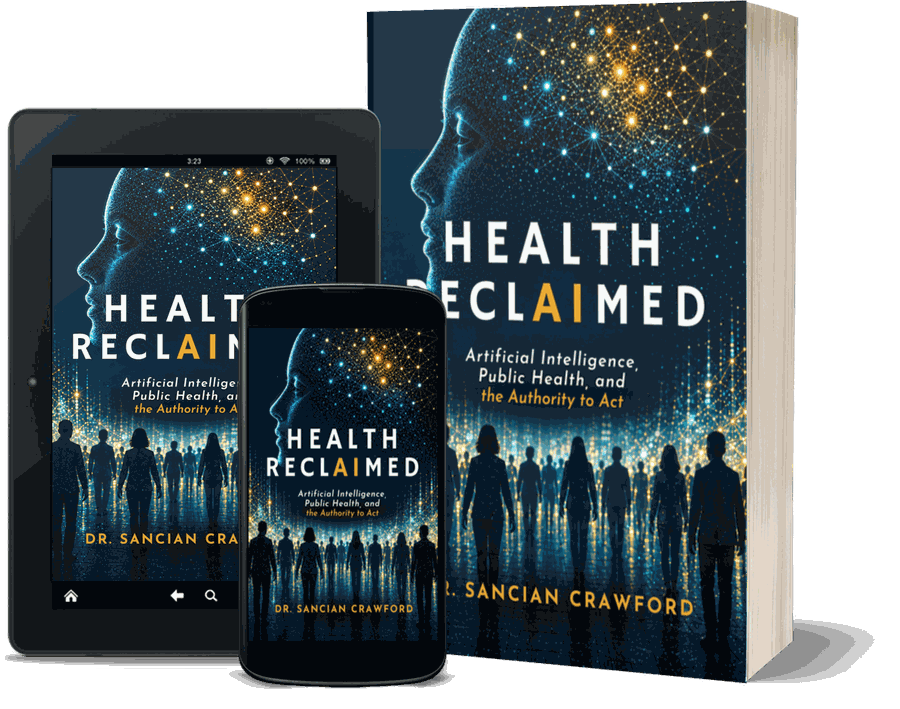
- Foreword by Alicia Lyttle, MSPH
- Library of Congress 2026923477
- HHS-ONC rulemaking record
- Published by SANCIAN LLC
The argument
Seeing sooner is not the same as acting sooner.
Artificial intelligence is changing what health systems can detect, predict, and record. Detection is one part of public health action, and rarely the part that binds.
An institution also needs the authority to act, the capacity to respond, the standing to intervene, and a record of who answers for what follows. None of that arrives with the model.
Health Reclaimed examines the distance between intelligence and action, and what has to be built inside it.
The evidence
What the book examines
Two systems, nine days
Independent surveillance found outbreak signals ahead of formal reporting, five years apart. Neither produced a faster response. The constraint was never detection.
Half the referrals
A screening deployment across 600,000 patients missed nobody with severe disease, and roughly half of those it flagged did not have it. That was the correct trade, and it only works where capacity exists.
An accurate algorithm
A widely used risk model predicted costs precisely and underestimated the needs of Black patients. Every technical evaluation reported success.
Fourteen days in 1918
Two cities had the same information about the same pandemic. One acted two weeks sooner. What differed was who decided, and when.
From the foreword
Artificial intelligence can help public health see sooner, but it cannot independently give institutions the legitimacy, resources, courage, or accountability needed to act.
Founder, International Association of Artificial Intelligence Consultants
Readership
Who this book is for
Public health leaders
Responsible for turning intelligence into population-level action.
Healthcare executives
Deploying AI into environments where technical performance is one part of readiness.
Policy and regulatory leaders
Designing the rules that govern what institutions may, must, and should do.
AI and governance leaders
Building systems that have to survive implementation, oversight, and accountability.
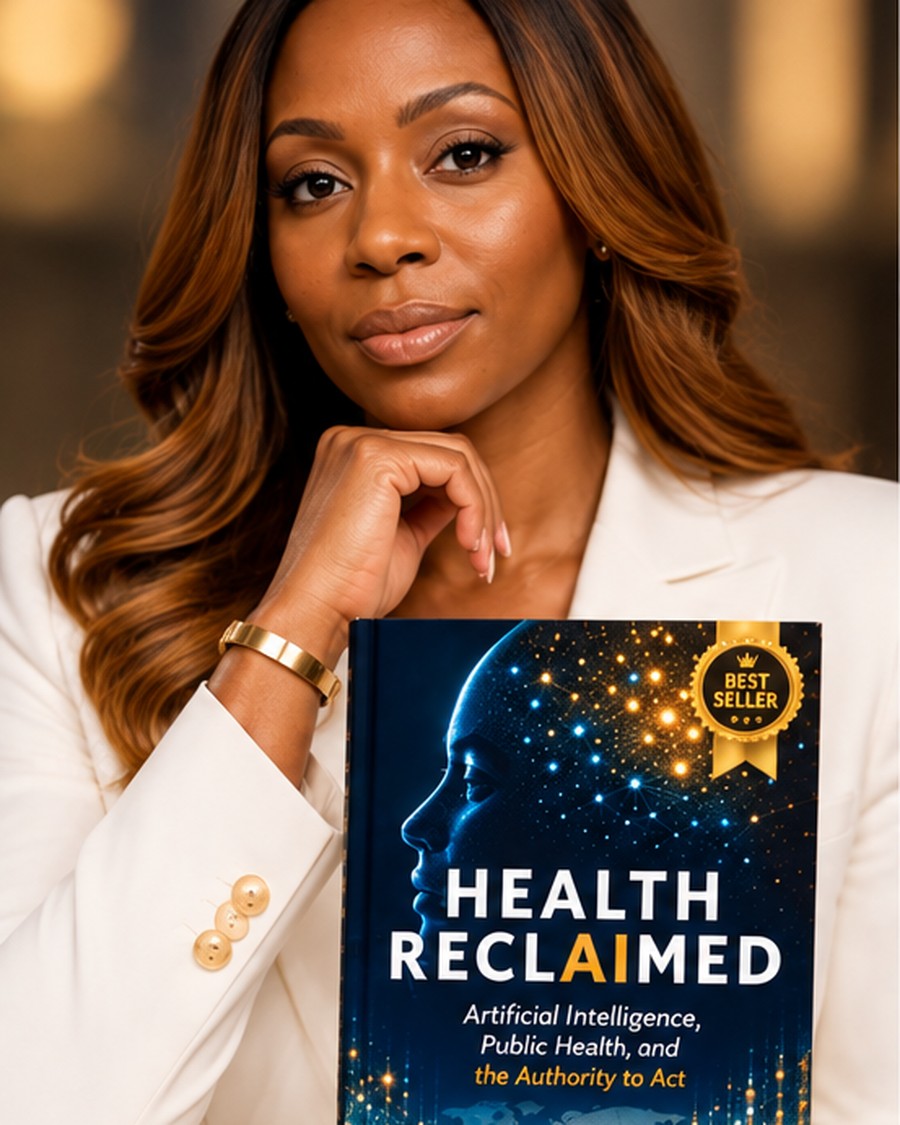
Written by someone who files on the record
Dr. Sancian Crawford is a public health strategist and the founder of SANCIAN LLC, an artificial intelligence governance practice working with health institutions on readiness, decision rights, and accountability.
Her work asks a narrower question than most writing in this field. Not what artificial intelligence can do, but what has to be true around it before what it produces reaches anyone.
A formal commenter on United States federal artificial intelligence rulemaking, with comments on record at the Department of Health and Human Services on dockets HHS-ONC-2025-0005 and HHS-ONC-2026-0001.
- Public health strategist
- AI governance advisor
- Federal rulemaking commenter
- Founder, SANCIAN LLC
Editions
Order Health Reclaimed
Publisher SANCIAN LLC, Atlanta, Georgia Library of Congress 2026923477 Extent 369 pages
Continue
Read the book. Continue the work.
For readers
The book is fixed. The record keeps moving.
- The introduction and chapter one, free
- The four assessments, in full
- Current regulatory status of everything cited
Open to everyone · No sign-in
For leaders
Where policy becomes procurement.
- Rulemaking and guidance as it lands
- Procurement and implementation analysis
- Monitoring, oversight, and enforcement
Weekly, for federal health leaders
For institutions
From what a model shows to what an agency can do.
- Readiness and governance assessment
- Decision rights and accountability
- Governance-ready implementation
Advisory · Strategy · Implementation
The Health Reclaimed community
The four assessments in fillable form, reader discussion by chapter, and a standing record of what has changed since the book went to print. The appendices are printed in full in the book; membership adds the usable version.
Free for readers · Hosted on Skool
The AI Governance Report
One brief a week on the policy, procurement, and oversight decisions shaping how AI is operationalized across health systems.
Subscribing adds you to The AI Governance Report, one brief a week. No promotional email, and one click unsubscribes.